Ceramic
Kids shape clay with pinch, coil, and assembly techniques before moving to the pottery wheel. Pieces are finished by level, including firing and painting or glazing.
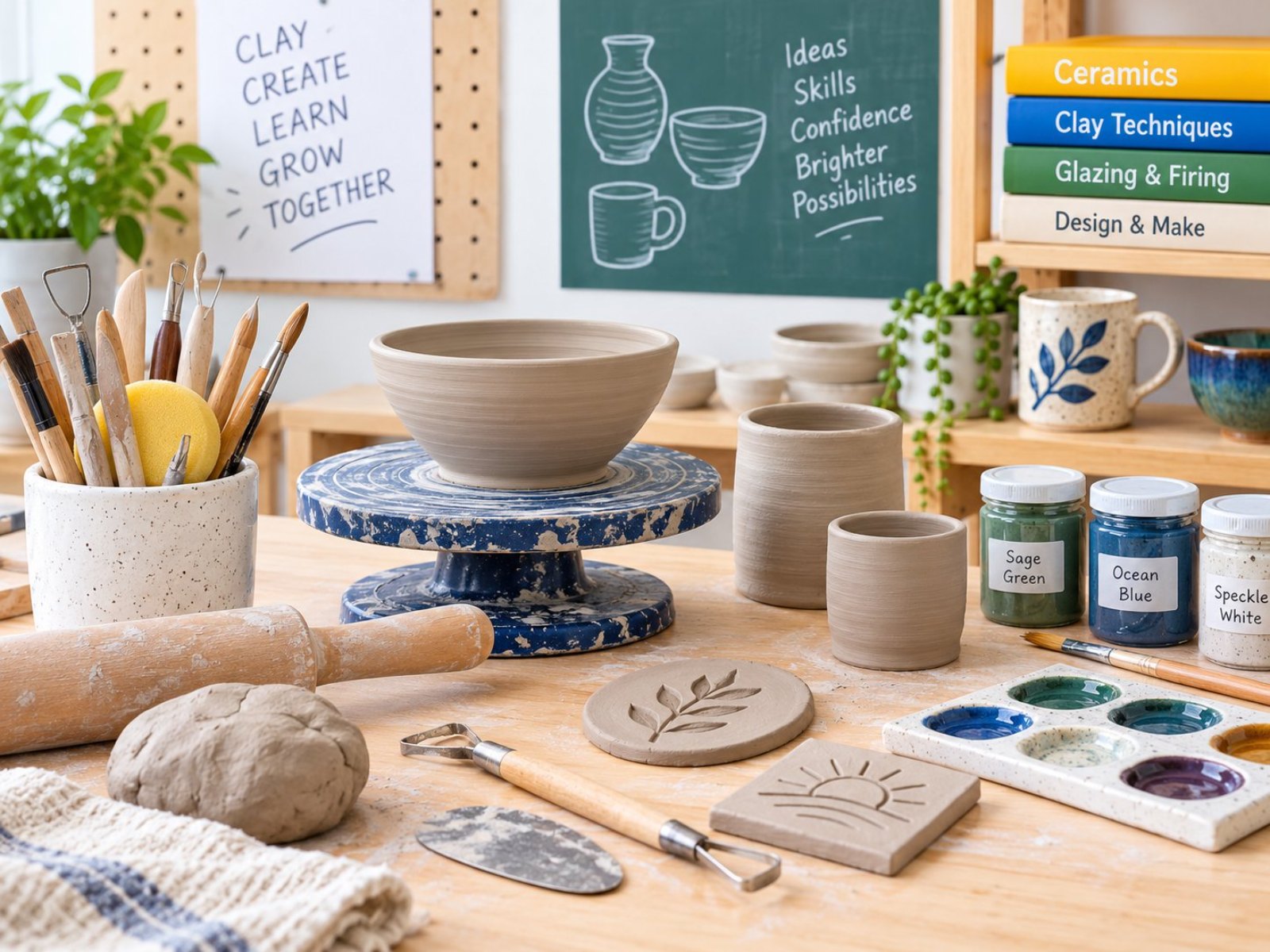 Photo: Ceramic (5:4)
Class details
offline at school · online available
1 hr/week
8–25/class (offline) · 50 (online)
Indonesian or English
1 teacher per 4–10 students · 2 teachers up to 20 · >20 opens a second class · extra teacher free
A workbook for every level + their own kiln-fired ceramics, painted or glazed, to take home
Nothing to bring (all tools provided)
Classroom (and outdoor area for some activities)
What every student receives
- Own ceramic pieces, fired & painted (glazed at upper levels), returned in 7–14 days
- 1 kg of clay every session
- Own tool set: sculpting, shaping, needle, carving & cutting
- Report card & progress notes
- Ceramic certificate each semester
- Photo & video documentation on request
12 levels · 4 stages
Beginner 1–2 · Basic 1–6 · Intermediate 1–2 · Advance 1–2
16 sessions and one book per level
Kindergarten in Beginner, elementary to high school in Basic 1
2 books · 2 semesters (±1 year)
Kindergarten (K1–K2)
Tools / softwarePlaydough and air-dry clay; no kiln, no sharp tools
- Squeezing, rolling and pressing clay
- Textures, stamps and cookie cutters
- Thumb pots and small coils
 Sample work Beginner 1
 Sample work Beginner 2
 Sample work Beginner 3
6 books · 6 semesters (±3 years)
Elementary (new students up to high school start here too)
Tools / softwareClay, Dry Clay, guided turns on the wheel; staff fire the kiln
- Pinch, coil, slab, texture, score-and-slip
- Characters and animals: proportion, expression, balance
- Combining techniques and designing their own pieces
 Sample work Basic 1
 Sample work Basic 2
 Sample work Basic 3
2 books · 2 semesters (±1 year)
After Basic, mostly middle school
Tools / softwareStoneware, own wheel time, moulds, slip casting, glaze
- Independent throwing: centering, cylinders, trimming
- Slab building, press moulds and slip casting
- Glaze tests and glazing their own work
 Sample work Intermediate 1
 Sample work Intermediate 2
 Sample work Intermediate 3
2 books · 2 semesters (±1 year)
After Intermediate, mostly high school
Tools / softwareWheel, plaster moulds, underglaze, wax resist; staff fire the kiln
- Tableware sets and surface design
- Client briefs and portfolio photos
- Hollow sculpture, relief panels and an exhibition
 Sample work Advance 1
 Sample work Advance 2
 Sample work Advance 3
For every school level
Every student follows the same path; the starting point, pace and depth of the work match their age.
- Starts at
- Beginner 1
- How they learn
- Squeezing, rolling and pressing playdough and air-dry clay, guided by the teacher.
- Sample work
- Rainbow Snake, Little Hedgehog
- Starts at
- Basic 1
- How they learn
- Slower pace, basic hand techniques with plenty of teacher help.
- Sample work
- My First Bowl, Leaf Plaque, Snail Friend
- Starts at
- Basic 1
- How they learn
- One book per semester, growing independence and guided turns on the wheel.
- Sample work
- My Frog, My Robot Helper, My Dinosaur Baby
- Starts at
- Basic 1 (new) · Intermediate (continuing)
- How they learn
- Faster pace and deeper projects; moves on to independent throwing, moulds and glazing.
- Sample work
- My Winged Dragon, Centered Cylinder Cup, Handled Mug
- Starts at
- Basic 1 (new) · Advance (continuing)
- How they learn
- Independent, project-based, up to functional sets and a ceramics exhibition.
- Sample work
- My Tiny Lighthouse, Tableware Set for Four, Hollow Figure Sculpture
- Starts at
- Custom class · can continue to Intermediate
- How they learn
- Topics, number of sessions and schedule set with the school; projects that are useful right away.
- Sample work
- A set of four coasters, a souvenir set for gift hampers, a handled mug
From the Ceramic classroom
 Photo: Ceramic 1
 Photo: Ceramic 2
 Photo: Ceramic 3
 Photo: Ceramic 4
 Photo: Ceramic 5
Questions about Ceramic
Does the school need a special room?
Classroom (and outdoor area for some activities).
What do students need to bring?
Nothing to bring (all tools provided).
How many students are in one class?
Capacity: 8–25/class (offline) · 50 (online). One teacher guides 4–10 students; up to 20 students get two teachers; above 20 a second class opens. Extra teachers at no cost.
How long do students stay in this programme?
There are 12 levels in four stages: Beginner 1–2, Basic 1–6, Intermediate 1–2 and Advance 1–2. One level is one semester (16 sessions) with its own book, so students can continue for years.
How is it different for kindergarten and high school?
The path is the same, but the starting point, pace and depth of work differ. Kindergarten starts in Beginner; new students from elementary to high school start in Basic 1, with middle and high schoolers moving faster and more independently. See "For every school level".
Is there a class for parents or teachers?
Yes. Adult classes are custom-built with the school: topics, number of sessions and schedule are agreed together. Participants who want to continue can move on to the Intermediate stage.
Which tools and materials are used?
Beginner uses playdough and air-dry clay, with no kiln. Basic uses real clay with guided turns on the wheel, while staff handle glazing and firing. Intermediate and Advance use the wheel independently, moulds, and students glaze their own work; kiln firing is still done by staff.
Can the class run online?
Yes. Classes run offline at school, and an online version is also available.
Can the school try it first?
Yes. We run a free demo class or ASA Expo at your school before enrolment opens.