Science Art
Children learn science concepts through experiments with color, reactions, air, water, and light, practicing observation and recording results in an experiment journal.
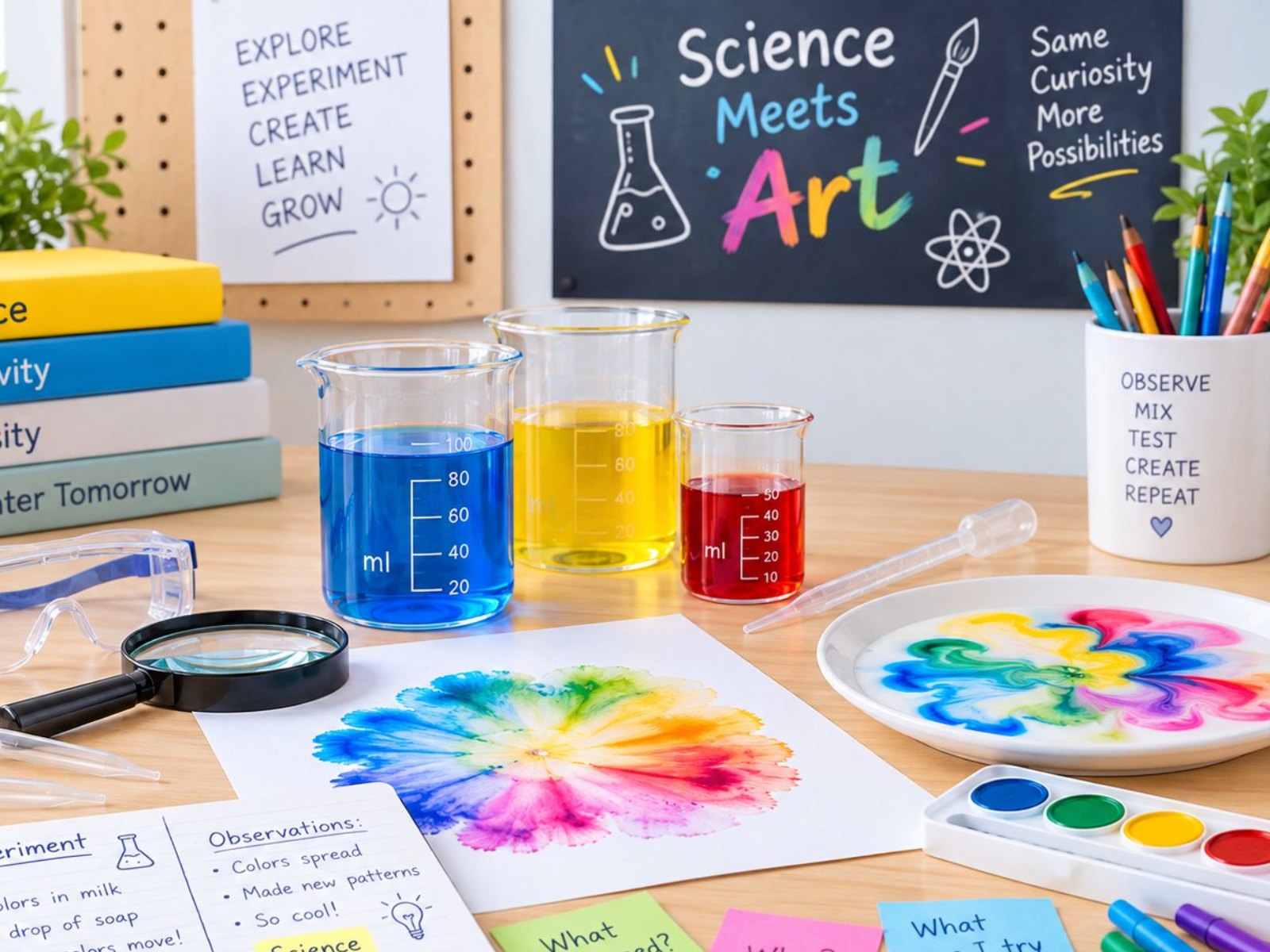 Photo: Science Art (5:4)
Class details
offline at school · online available
1 hr/week
8–25/class (offline) · 50 (online)
Indonesian or English
1 teacher per 4–10 students · 2 teachers up to 20 · >20 opens a second class · extra teacher free
A lab book for every level + art made from their own experiments; lab tools are provided and materials prepared each session
Computer & stable internet (online classes only)
Classroom (plus outdoor space for some activities)
What every student receives
- Experiment results taken home every session (slime, lava lamps, crystals, etc.)
- Personal safety gear: goggles, gloves, mask, lab coat
- Science tools: dropper, magnifying glass
- Science journal & experiment book
- Report card & progress report
- Science Art certificate every semester
- Photo & video documentation on request
12 levels · 4 stages
Beginner 1–2 · Basic 1–6 · Intermediate 1–2 · Advance 1–2
16 sessions and one book per level
Kindergarten in Beginner, elementary to high school in Basic 1
2 books · 2 semesters (±1 year)
Kindergarten (K1–K2)
Tools / softwareMagnifying glass, feely box, play dough, seeds, big droppers
- The five senses through simple experiments
- Growing seeds, watching small animals and weather
- The guess – try – draw routine
 Sample work Beginner 1
 Sample work Beginner 2
 Sample work Beginner 3
6 books · 6 semesters (±3 years)
Elementary (new students up to high school start here too)
Tools / softwareDroppers, torch, magnets, digital thermometer, safety goggles
- Colour, water, light, sound and motion
- Fair tests: change one thing, record evidence
- Designing solutions: water filters and flood walls
 Sample work Basic 1
 Sample work Basic 2
 Sample work Basic 3
2 books · 2 semesters (±1 year)
After Basic, mostly middle school
Tools / softwareDigital scale, multimeter, phone clip-on microscope, Google Sheets
- Measuring, repeating three times, then graphing
- Forces, chemical reactions, electricity and cells
- Their own Young Scientist project and display board
 Sample work Intermediate 1
 Sample work Intermediate 2
 Sample work Intermediate 3
2 books · 2 semesters (±1 year)
After Intermediate, mostly high school
Tools / softwarePhone sensors (phyphox), pH/TDS meter, spreadsheet, Canva
- Applied labs: cyanotype, bioplastics and water quality
- Independent research, basic statistics and a competition paper
- Science poster, capstone artwork and exhibition
 Sample work Advance 1
 Sample work Advance 2
 Sample work Advance 3
For every school level
Every student follows the same path; the starting point, pace and depth of the work match their age.
- Starts at
- Beginner 1
- How they learn
- Experiments through the senses and nature, fully guided by the teacher.
- Sample work
- My Senses Book, Color Dough Friends
- Starts at
- Basic 1
- How they learn
- Slower pace, often in groups, with plenty of teacher help.
- Sample work
- Dancing Milk Colors, Hidden Color Flowers, Tornado Bottle
- Starts at
- Basic 1
- How they learn
- One book per semester, starting to record their own evidence.
- Sample work
- Pinhole Picture Tube, Clearer Water Filters, Flood Wall Challenge
- Starts at
- Basic 1 (new) · Intermediate (continuing)
- How they learn
- Faster pace; measuring with numbers and graphs.
- Sample work
- Mystery-Sample Mosaic, pH Gradient Painting, Young Scientist Project
- Starts at
- Basic 1 (new) · Advance (continuing)
- How they learn
- Independent, research-based, up to an exhibition and a competition-format paper.
- Sample work
- Cyanotype Botanical Series, Bioplastic Strength Test, Independent Research Paper
- Starts at
- Custom class · can continue to Intermediate
- How they learn
- Topics, number of sessions and schedule set with the school; kitchen-ingredient experiments ready to use at home or in class.
- Sample work
- Dancing Milk Art, Cabbage Color Painting, Mini Research Poster
From the Science Art classroom
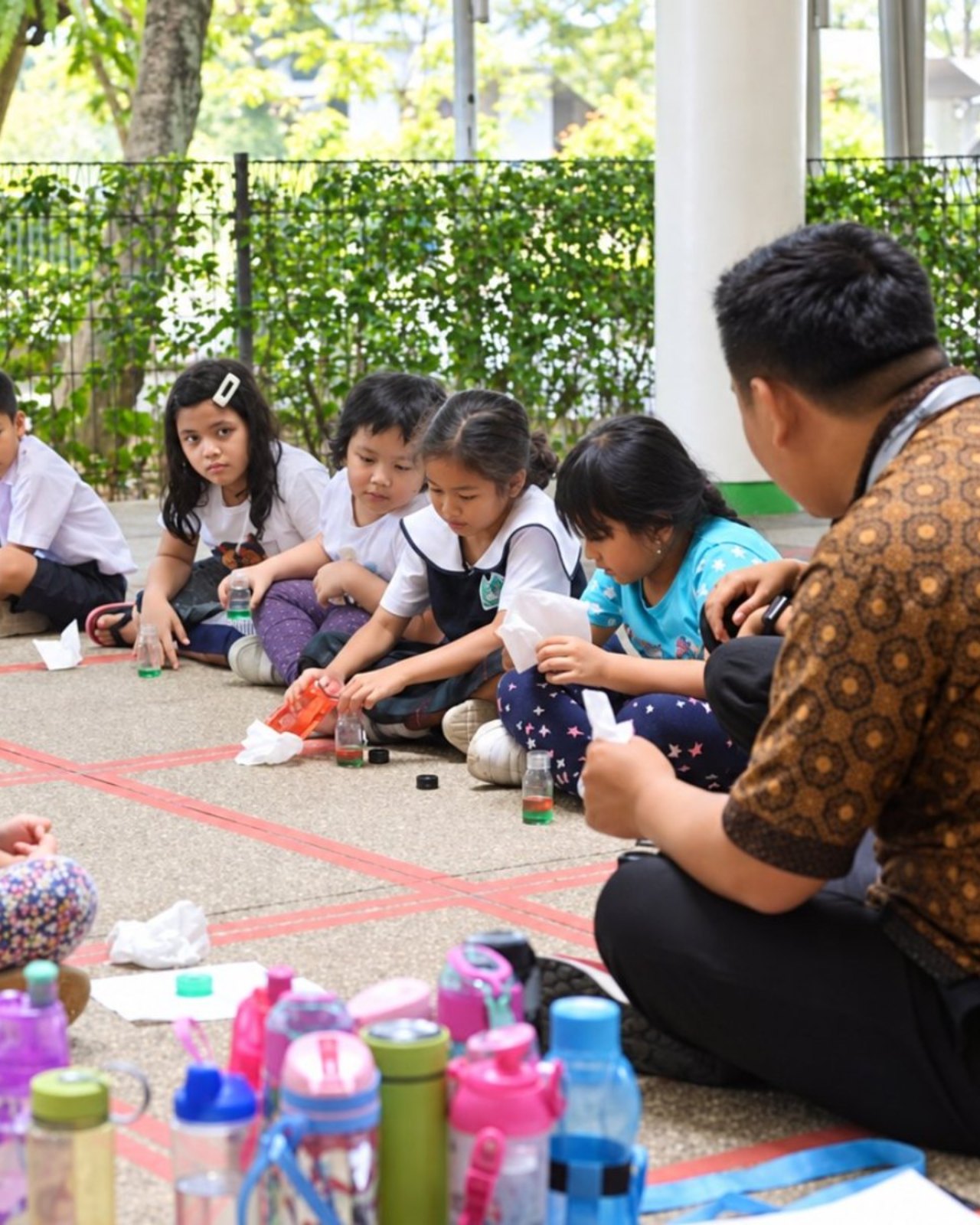 Photo: Science Art 1
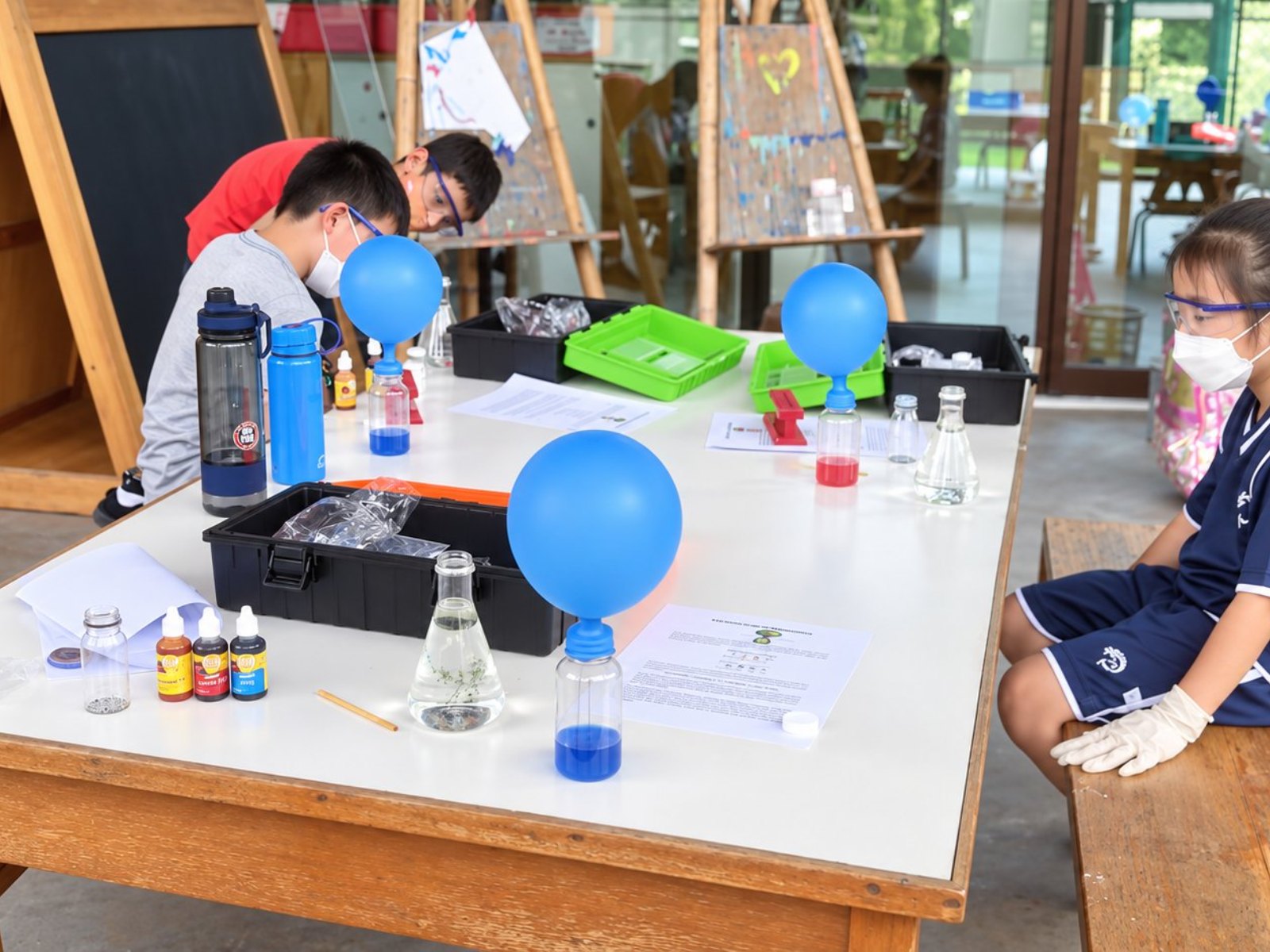 Photo: Science Art 2
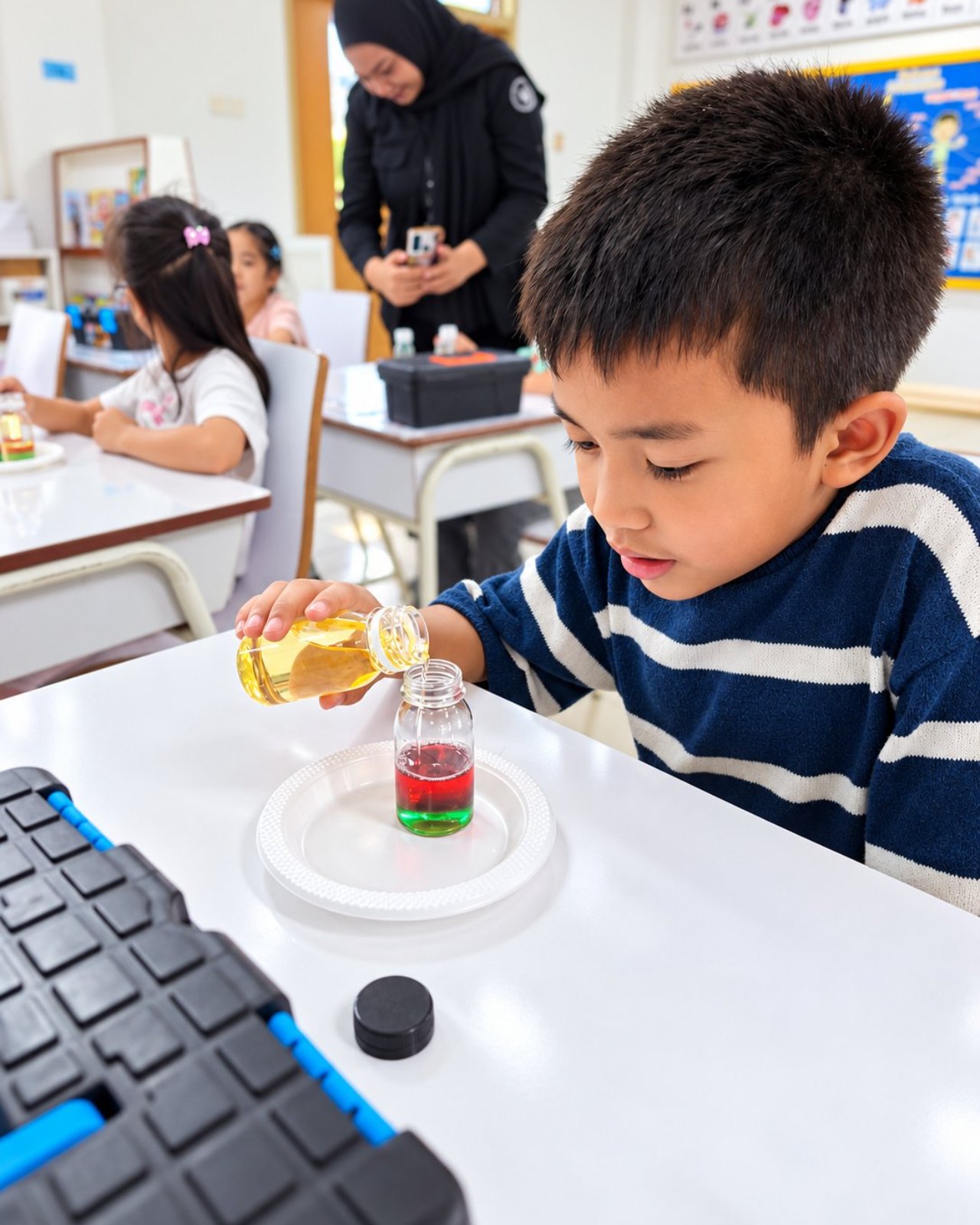 Photo: Science Art 3
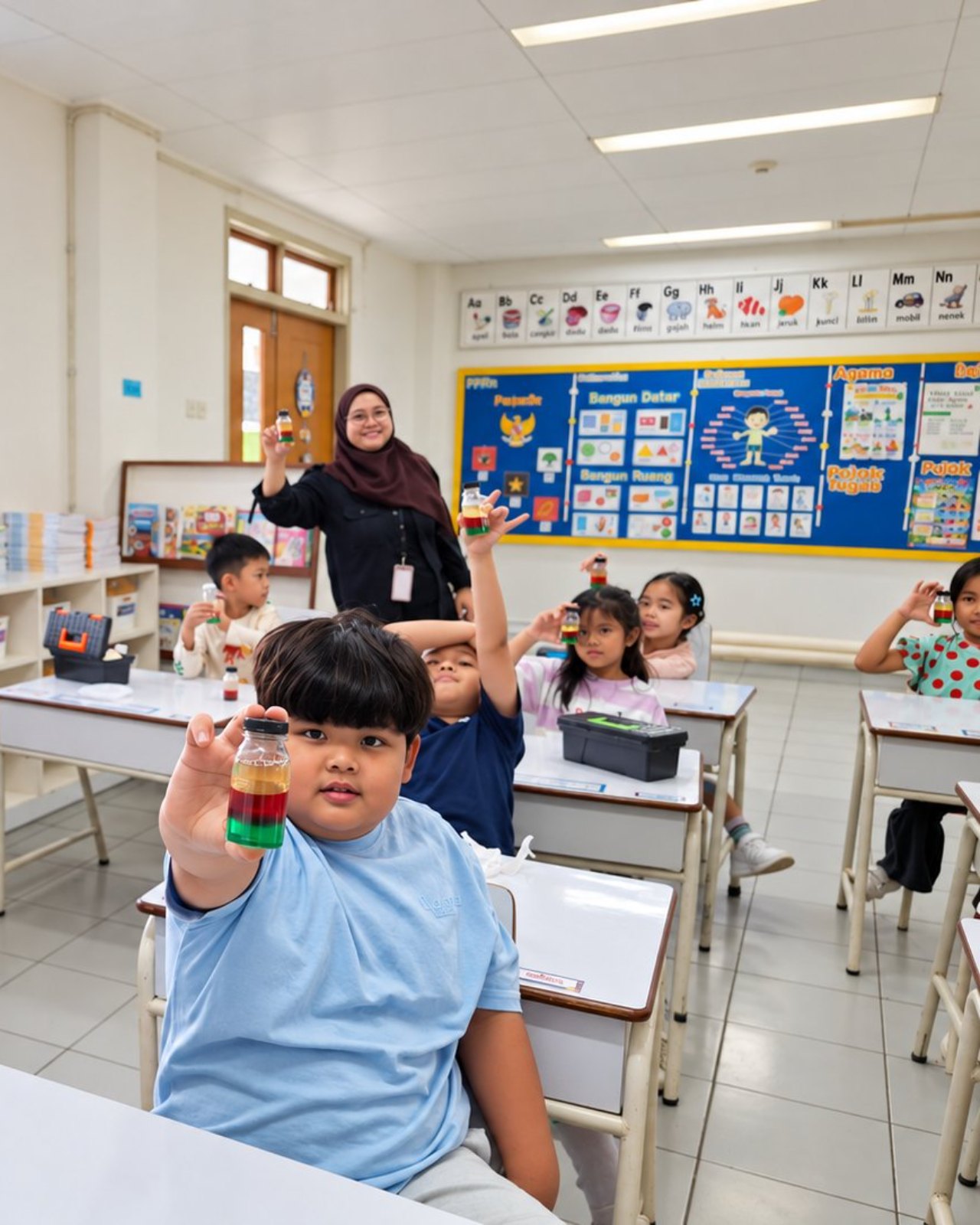 Photo: Science Art 4
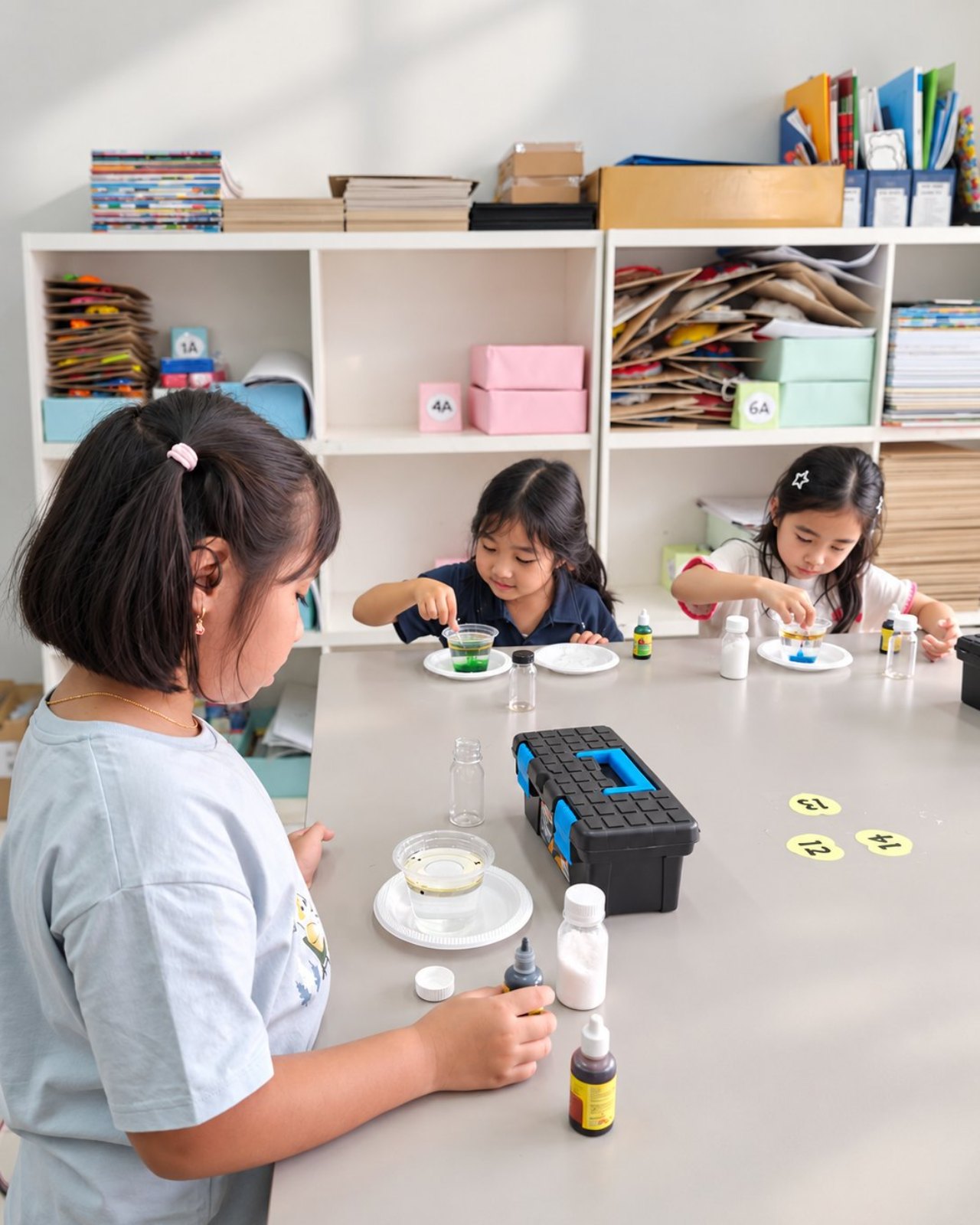 Photo: Science Art 5
Questions about Science Art
Does the school need a special room?
Classroom (plus outdoor space for some activities).
What do students need to bring?
Computer & stable internet (online classes only).
How many students are in one class?
Capacity: 8–25/class (offline) · 50 (online). One teacher guides 4–10 students; up to 20 students get two teachers; above 20 a second class opens. Extra teachers at no cost.
How long do students stay in this programme?
There are 12 levels in four stages: Beginner 1–2, Basic 1–6, Intermediate 1–2 and Advance 1–2. One level is one semester (16 sessions) with its own book, so students can continue for years.
How is it different for kindergarten and high school?
The path is the same, but the starting point, pace and depth of work differ. Kindergarten starts in Beginner; new students from elementary to high school start in Basic 1, with middle and high schoolers moving faster and more independently. See "For every school level".
Is there a class for parents or teachers?
Yes. Adult classes are custom-built with the school: topics, number of sessions and schedule are agreed together. Participants who want to continue can move on to the Intermediate stage.
Which tools and materials are used?
Beginner uses magnifying glasses, play dough and natural materials; Basic uses child-friendly lab tools such as droppers, torches, magnets and digital thermometers; Intermediate adds digital scales, multimeters and spreadsheets; Advance uses phone sensors, pH/TDS meters and research equipment. Consumables are prepared each session and students wear safety goggles.
Can the class run online?
Yes. Classes run offline at school, and an online version is also available.
Can the school try it first?
Yes. We run a free demo class or ASA Expo at your school before enrolment opens.